
A patient told me her “official” protein number. It was so low I went home and tested my own. The calculator was off by half.
It started in a visit. A patient mentioned the protein target she’d been given.
She’d looked it up on an official calculator, and the number was so low it stopped me mid-sentence. That can’t be right, I thought. Not for a woman trying to stay strong as she ages.
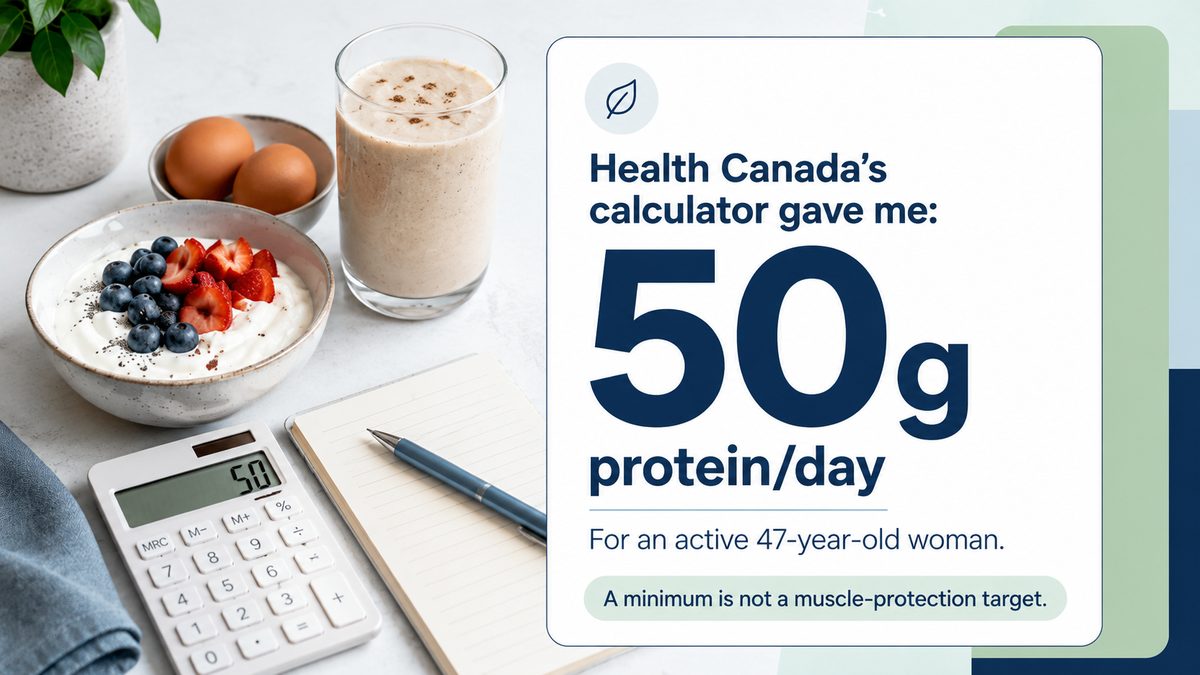
So I went and tried it myself. I pulled up Health Canada’s own Dietary Reference Intakes calculator and typed in my real numbers: 47 years old, active several days a week, 137 pounds. It thought for a second and gave me an answer.
About 50 grams of protein a day.
Click to enlarge
50 grams!!! For an active woman in her forties who’s trying to stay strong, steady, and energized.
My patient’s number wasn’t a fluke, the calculator does this to everyone. And when I dug into why it lands so low, I found something every woman over 40 deserves to know.
Here’s the problem. That number wasn’t built for me, or for my patient, or really for anyone. And it’s old …really old.
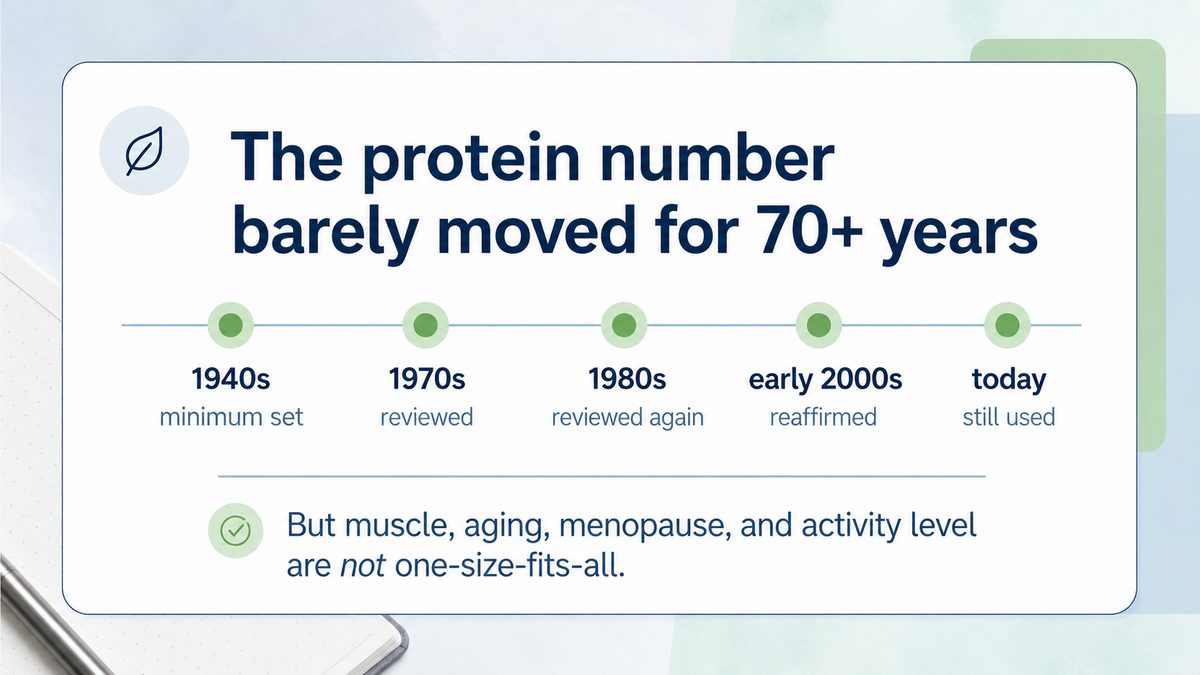
The protein recommendation first appeared in the 1940s, and the 0.8 figure has barely moved in more than 70 years.
It survived review after review. The 1970s, the 1980s, right up to its last major reaffirmation in the early 2000s, and stayed put.
Click to enlarge
Not because nothing was learned in all that time, but because of how the number was set in the first place. It was never built to measure how much protein keeps you strong.
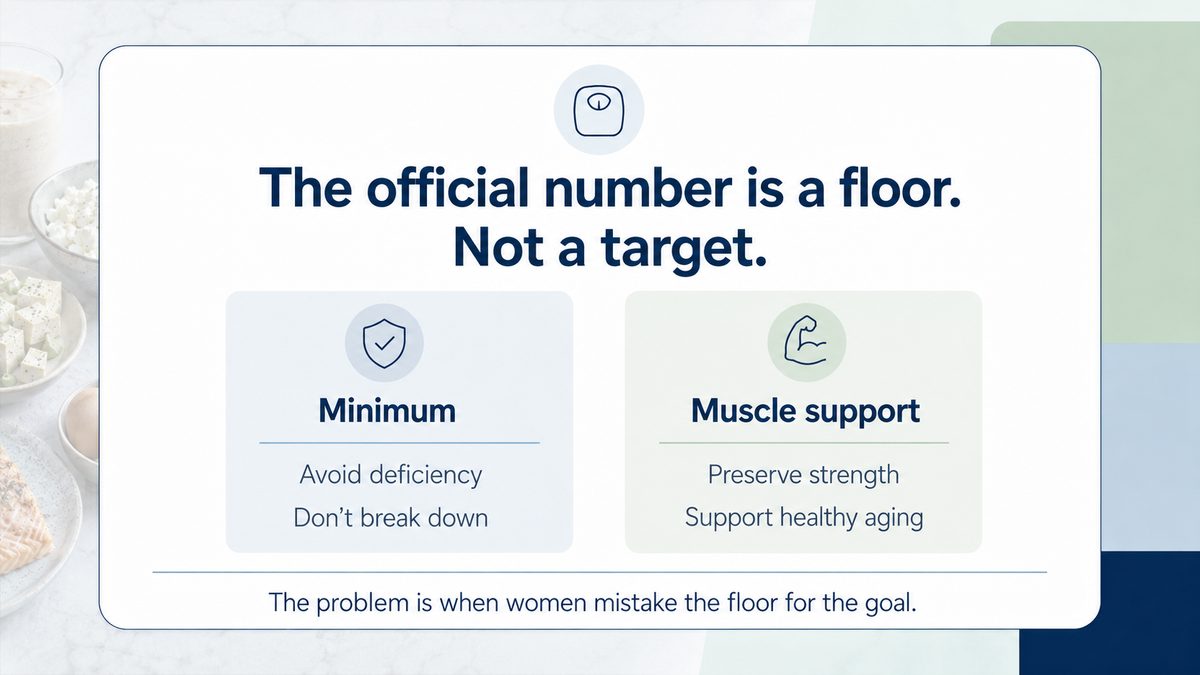
It was built on something called nitrogen balance. Essentially, the least protein you can eat without your body starting to break itself down. The break-even point. The “you won’t get sick” line, not the “you’ll thrive” line.
Click to enlarge
And here’s what stings: when modern researchers re-run the math with better tools, they keep landing on a number 40 to 50 percent higher than the official one.
That number is 0.8 grams of protein per kilogram of body weight, and it’s the same whether you’re a 25-year-old training for a marathon or an 80-year-old recovering from a hip fracture.
One number, for everyone. It’s the nutritional equivalent of “the lowest temperature at which you won’t freeze to death.” Technically survivable. Not exactly comfortable.
That’s why my calculator said 50. Run the math: 137 pounds is about 62 kilograms, times 0.8, equals roughly 50 grams.
The calculator even asked how active I was, but in the official system, that activity answer changes your calorie estimate, not your protein.
Your protein number comes from body weight alone. So a woman who trains hard and a woman who never leaves the couch get handed the exact same protein target.
(Don’t take my word for it — try Health Canada’s own DRI calculator yourself, change only the activity level, and watch the protein number refuse to budge.)
For most of your young life, that floor is forgiving. But somewhere in your 40s and 50s, the rules quietly change, and almost no one gets the memo.
What actually happens to your muscles as you age
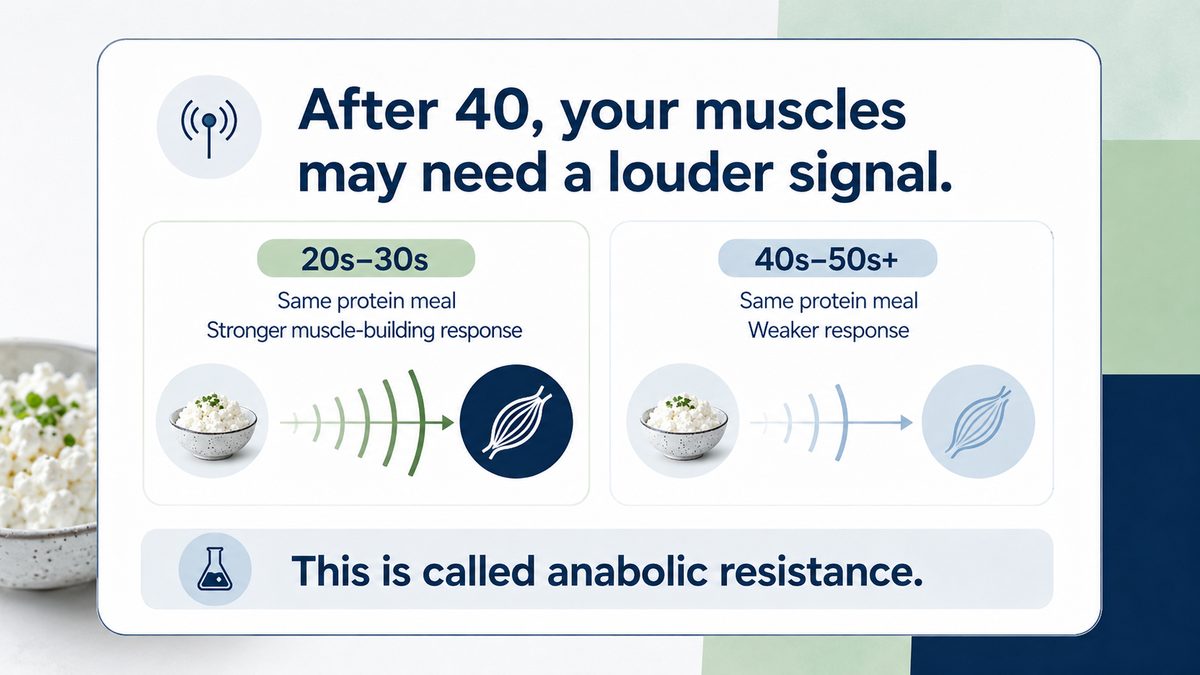
When you eat protein, your body uses it to build and repair muscle. Think of it like sending a text to your muscles that says “time to rebuild.”
In your 20s and 30s, your muscles read that text instantly and get to work. You barely have to try.
As you get older, and this accelerates after menopause, your muscles start to ignore the text.
Researchers call this anabolic resistance. Same protein, same meal, but a weaker response. Your muscles need a louder signal to do the same job they used to do automatically.
Click to enlarge
This isn’t a small detail. Starting in your 40s, most women lose muscle steadily, and the rate picks up after menopause, when estrogen (which helps protect muscle and bone) drops.
Less muscle means a slower metabolism, weaker bones, more falls, and a harder time staying independent later in life.
Muscle isn’t about looking toned. It’s the tissue that keeps you strong, steady, and self-sufficient into your 70s, 80s, and beyond.
So as the signal gets quieter, you have to turn up the volume. And the way you turn up the volume is……. more protein.
How much more? The chart that changes everything
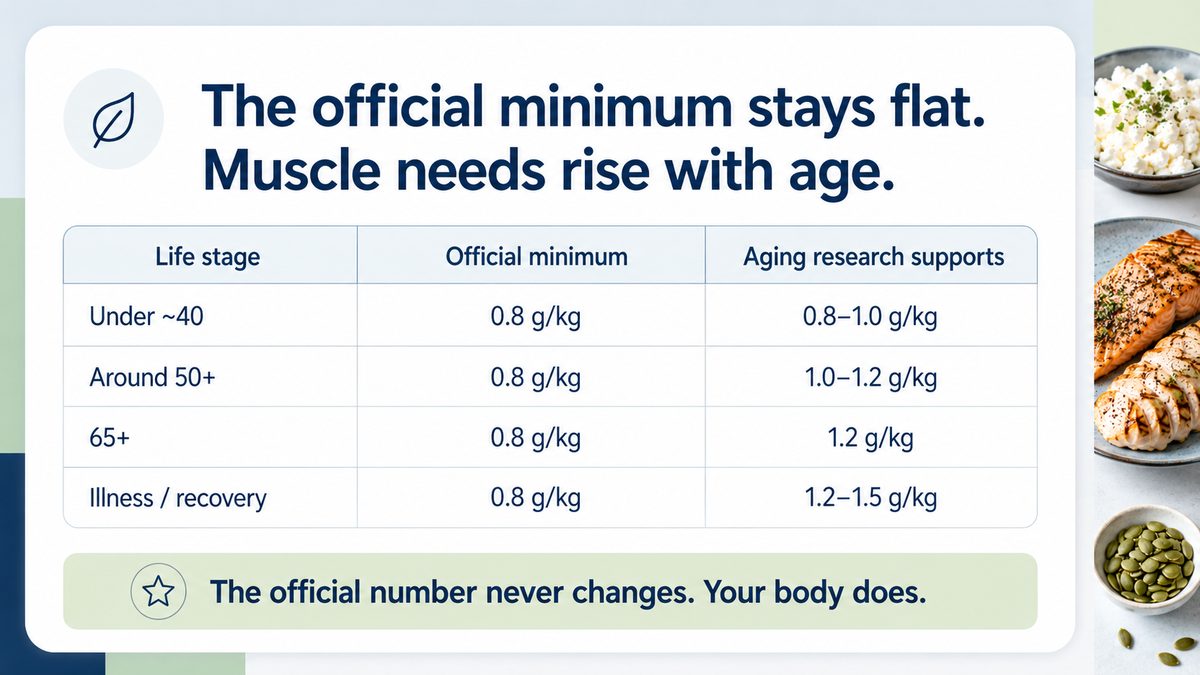
Here’s the part worth saving and sharing. The official minimum never moves, it’s 0.8 g/kg at every age.
But the research on healthy aging tells a different story: as anabolic resistance sets in, the amount that actually protects your muscle climbs. Watch what happens to the gap.
The frozen minimum vs. what your muscle actually needs (grams of protein per kg of body weight, per day)
Click to enlarge
The 0.8 g/kg minimum is the official RDA used in Canada and the U.S. The higher targets come from international expert consensus on aging — the PROT-AGE group (2013) and ESPEN (2014) — which recommend 1.0–1.2 g/kg for healthy older adults and up to 1.5 g/kg during illness or recovery. There’s no separate official number for each decade; the point isn’t a precise figure for age 47 — it’s that the official minimum stays frozen while real-world needs rise.
Look at the left column: it never changes. For seventy years, one number, no matter who you are.
Now look at the right: it holds steady through your younger years, then climbs right around 50 and keeps going. That’s the story in one image, the official floor flatlines while your body quietly asks for more.
Make it real: a 150-lb (68-kg) woman sits near 55 grams a day at that old minimum, but closer to 80 grams once she’s older and protecting her muscle.
That’s a 25-gram difference.
About the protein in a chicken breast or a big scoop of Greek yogurt, and most women drift the opposite way as they age, eating less right when they need more.
Age is only half the picture: your number also depends on how you live
The chart above answers one question: how does age alone change my needs? But age is only one dial.
Your actual target also shifts with how active you are and what you’re trying to do with your body.
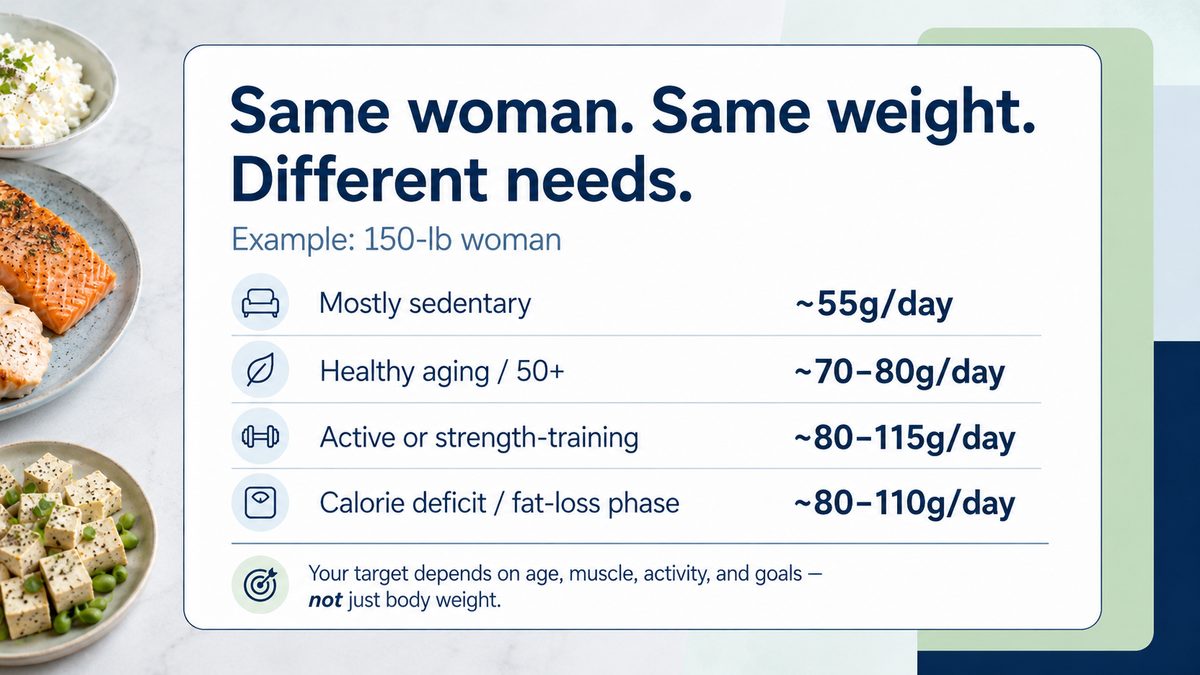
Here’s how the same person, at the same weight, can land in very different places.
Click to enlarge
If you’re mostly sedentary, you’re at that old 0.8 g/kg floor, the minimum to avoid deficiency, not the amount that builds and protects muscle.
If you strength-train or stay genuinely active, your needs jump to roughly 1.2 to 1.7 g/kg. Training ramps up how fast your body breaks down and rebuilds muscle, and the tension of working a muscle signals it to grow.
Protein is the raw material for both. For a 150-lb woman that’s about 80 to 115 grams a day. This is the range most active women badly underestimate.
Once you’re past 40, protecting against age-related muscle loss pushes the floor up to about 1.0 to 1.2 g/kg, and higher still as the decades climb. Age and activity stack on top of each other.
And if you’re eating in a calorie deficit, trying to manage your metabolism and body composition, protein becomes more important, not less.
Aim for 1.2 to 1.6 g/kg. Eating enough protein while cutting calories is what keeps your body burning fat instead of cannibalizing the very muscle you’re working to keep.
Almost every real-life situation a midlife woman finds herself in, active, over 40, watching her weight, pulls the number up from that 0.8 floor, never down.
The “minimum” was never meant to be your target.
So, do you really need to spread it out?
I’ll give you the honest answer here, not the tidy one.
The popular advice is to spread protein evenly across the day. Some at breakfast, lunch, and dinner , rather than loading it all at supper.
There’s good logic behind it. To send that “rebuild” signal strongly enough, a meal needs to clear a certain threshold.
Research points to roughly 25 to 35 grams of quality protein per meal for women in midlife and beyond. Three meals that each hit that mark send three strong signals. A day with one big protein dinner and two protein-light meals may only send one.
That’s a real, useful idea, and most women’s weakest spot is breakfast. The classic toast-and-coffee or fruit-and-oatmeal morning is almost protein-free, which means you spend half your day having sent your muscles no signal at all.
But here’s the honest caveat: when researchers have directly tested even-spreading against uneven-spreading, the results are mixed.
At least one well-run trial found that as long as the daily total was high enough, the exact distribution didn’t make a big difference. So I won’t oversell it.
Here’s how I’d put it:
Hit your daily total first. That’s 80% of the win.
Spreading it out is the polish on top, most worth it if you’re someone who barely eats protein in the morning, which is most people.
A simple target: aim for a palm-sized portion of protein (or a couple of eggs, or a generous scoop of Greek yogurt) at each meal. Anchor your breakfast first, because that’s where the gap usually is.
The takeaway I want you to remember
If you take one thing from this: the protein advice you absorbed in your 30s is quietly working against you in your 50s and 60s.
Your muscles aren’t failing you. They’re just asking you to speak a little louder. More protein, especially at breakfast, is how you do it , and it’s one of the most powerful, least complicated things you can do to stay strong, steady, and independent for decades.
You don’t need a supplement aisle or a complicated plan. You need to know your number, and you need to actually eat it.
Curious where you actually stand right now? Here’s something I love about how we work: an InBody composition scan is part of every visit at our Toronto clinic. Not an add-on, not an upsell, just standard care.
In about sixty seconds it maps what the bathroom scale never could: your skeletal muscle mass, your body fat percentage, your hydration, and how your lean tissue is distributed.
Then we use those numbers to do something most general advice can’t… set a protein target built around your body. Not a generic chart.
We take your actual skeletal muscle mass, your body fat percentage, your age, your activity, and your health history, and we translate them into a daily protein range that fits the body you’re living in today.
And because the scan is part of every visit, we can watch it over time, so you’re not guessing whether your protein is protecting your muscle. You can see it.
That’s the difference between following a number printed seventy years ago and following your number.
— Dr. Tara Campbell, ND
If you want to book a free consultation please click here. We would love to hear from you.
A note on the science: The protein RDA was first established by the U.S. Food and Nutrition Board in the 1940s and has stayed at roughly 0.8 g/kg through every major revision since, including its reaffirmation in the 2002–2005 Dietary Reference Intakes (the same DRIs Health Canada uses). It is derived from nitrogen-balance studies — the intake needed to avoid net loss of body protein — and so reflects a minimum to prevent deficiency rather than an amount optimized for muscle, strength, or healthy aging. Re-analyses using more complete nitrogen-balance data and the indicator amino acid oxidation (IAAO) method have estimated requirements closer to 1.0–1.2 g/kg/day — roughly 40–50% higher than the current RDA. The higher age-based targets reflect expert consensus from the PROT-AGE Study Group (2013) and ESPEN (2014), which recommend roughly 1.0–1.2 g/kg/day for healthy older adults and up to 1.2–1.5 g/kg/day during illness or recovery. The activity-based range of 1.2–1.7 g/kg/day reflects the Food and Nutrition Board (Institute of Medicine) and American College of Sports Medicine recommendations for active adults; the 1.2–1.6 g/kg range for those eating in a calorie deficit reflects guidance for preserving lean mass while restricting energy. The per-meal threshold reflects research on the “leucine threshold” needed to maximally stimulate muscle protein synthesis, which rises with age. Individual needs vary with kidney health, activity, and medical history — this is education, not a personal prescription.
References
The protein RDA, its history, and the nitrogen-balance method
- Institute of Medicine. Dietary Reference Intakes for Energy, Carbohydrate, Fiber, Fat, Fatty Acids, Cholesterol, Protein, and Amino Acids. Washington, DC: National Academies Press; 2002/2005. (The source of the 0.8 g/kg RDA used in Canada and the U.S.)
- National Research Council. Recommended Dietary Allowances, 10th ed. — “Protein and Amino Acids.” NCBI Bookshelf. https://www.ncbi.nlm.nih.gov/books/NBK234922/ and https://www.ncbi.nlm.nih.gov/books/NBK234929/
- Phillips SM. Current Concepts and Unresolved Questions in Dietary Protein Requirements and Supplements in Adults. Front Nutr. 2017;4:13. https://www.ncbi.nlm.nih.gov/pmc/articles/PMC5420553/
- Wolfe RR, et al. Optimizing Protein Intake in Adults: Interpretation and Application of the RDA Compared with the AMDR. Adv Nutr. 2017. https://www.sciencedirect.com/science/article/pii/S2161831322007165
- Ten Haaf DSM, et al. Is It Time to Reconsider the U.S. Recommendations for Dietary Protein and Amino Acid Intake? Nutrients. 2023;15(4):838. https://www.mdpi.com/2072-6643/15/4/838
Higher protein needs with aging (the basis for the chart)
- Bauer J, Biolo G, Cederholm T, et al. Evidence-Based Recommendations for Optimal Dietary Protein Intake in Older People: A Position Paper From the PROT-AGE Study Group. J Am Med Dir Assoc. 2013;14(8):542–559. doi:10.1016/j.jamda.2013.05.021. https://www.jamda.com/article/s1525-8610(13)00326-5/fulltext
- Deutz NEP, Bauer JM, Barazzoni R, et al. Protein intake and exercise for optimal muscle function with aging: Recommendations from the ESPEN Expert Group. Clin Nutr. 2014;33(6):929–936. doi:10.1016/j.clnu.2014.04.007
- Rafii M, et al. Protein Requirements during Aging. Nutrients. 2016. https://www.ncbi.nlm.nih.gov/pmc/articles/PMC4997405/
Per-meal protein and the leucine threshold
- Traylor DA, et al. Impacts of protein quantity and distribution on body composition. Front Nutr. 2024. https://www.frontiersin.org/journals/nutrition/articles/10.3389/fnut.2024.1388986/full
- Is leucine content in dietary protein the key to muscle preservation in older women? Am J Clin Nutr. https://pmc.ncbi.nlm.nih.gov/articles/PMC6248570/
- Cereda E, et al. Where to Find Leucine in Food and How to Feed Elderly With Sarcopenia. Front Nutr. 2020. https://www.frontiersin.org/journals/nutrition/articles/10.3389/fnut.2020.622391/full
Protein for active adults and during weight loss
- Mass General Brigham. How Much Protein After a Workout Is Best? (Summarizing Food and Nutrition Board / Institute of Medicine and American College of Sports Medicine guidance.) https://www.massgeneralbrigham.org/en/about/newsroom/articles/how-much-protein-when-working-out
- Jäger R, et al. International Society of Sports Nutrition Position Stand: Protein and Exercise. J Int Soc Sports Nutr. 2017;14:20. https://www.ncbi.nlm.nih.gov/pmc/articles/PMC5477153/
Why muscle grows (mechanical tension, not “microtears”)
- Schoenfeld BJ. The Mechanisms of Muscle Hypertrophy and Their Application to Resistance Training. J Strength Cond Res. 2010;24(10):2857–2872. doi:10.1519/JSC.0b013e3181e840f3. https://journals.lww.com/nsca-jscr/fulltext/2010/10000/the_mechanisms_of_muscle_hypertrophy_and_their.40.aspx
- Schoenfeld BJ. Does exercise-induced muscle damage play a role in skeletal muscle hypertrophy? J Strength Cond Res. 2012. (Concludes a direct cause-and-effect link between muscle damage and growth has not been established.)
The calculator referenced in this article
- Health Canada. Dietary Reference Intakes Calculator. https://health-infobase.canada.ca/nutrition/dietary-reference-intakes-calculator/
This article is for general education and is not a substitute for individual medical advice. Protein needs vary with kidney health, activity, and medical history.
Last Updated on Tuesday, June 30, 2026
The Vitamin D Conversation I’d Rather Have Now Than in January
Does IV Therapy Work? Here’s When It May Make Sense
Perimenopause and IV Therapy: What the Research Really Shows
