
By Dr. Tara Campbell, ND
Founder, Higher Health Naturopathic Centre & IV Lounge
The clocks just went back, it’s getting dark before dinner, and everywhere I turn, someone seems to be coming down with something.
The kids are bringing home colds from school. Someone at work has a sore throat. And you’re thinking, Please, not me. I really don’t have time to be sick right now.
Every fall, patients ask me the same question: “Dr. Tara, what should I be taking to support my immune system?”
And while there are nutrients I consider important, there’s another question I often ask first.
“How have you been sleeping?”
It might seem like a strange place to start, especially if you were expecting me to recommend vitamin C or zinc.
But there’s some fascinating research behind that question.
And it’s a good reminder that taking care of your immune system involves more than grabbing a bottle of vitamins off the pharmacy shelf.
So, as cold and flu season gets underway, here are a few things I think are worth your attention.
1. Sleep Might Be Your Most Overlooked Immune Support
We all know sleep is important. But the connection between sleep and getting sick is stronger than many people realize.
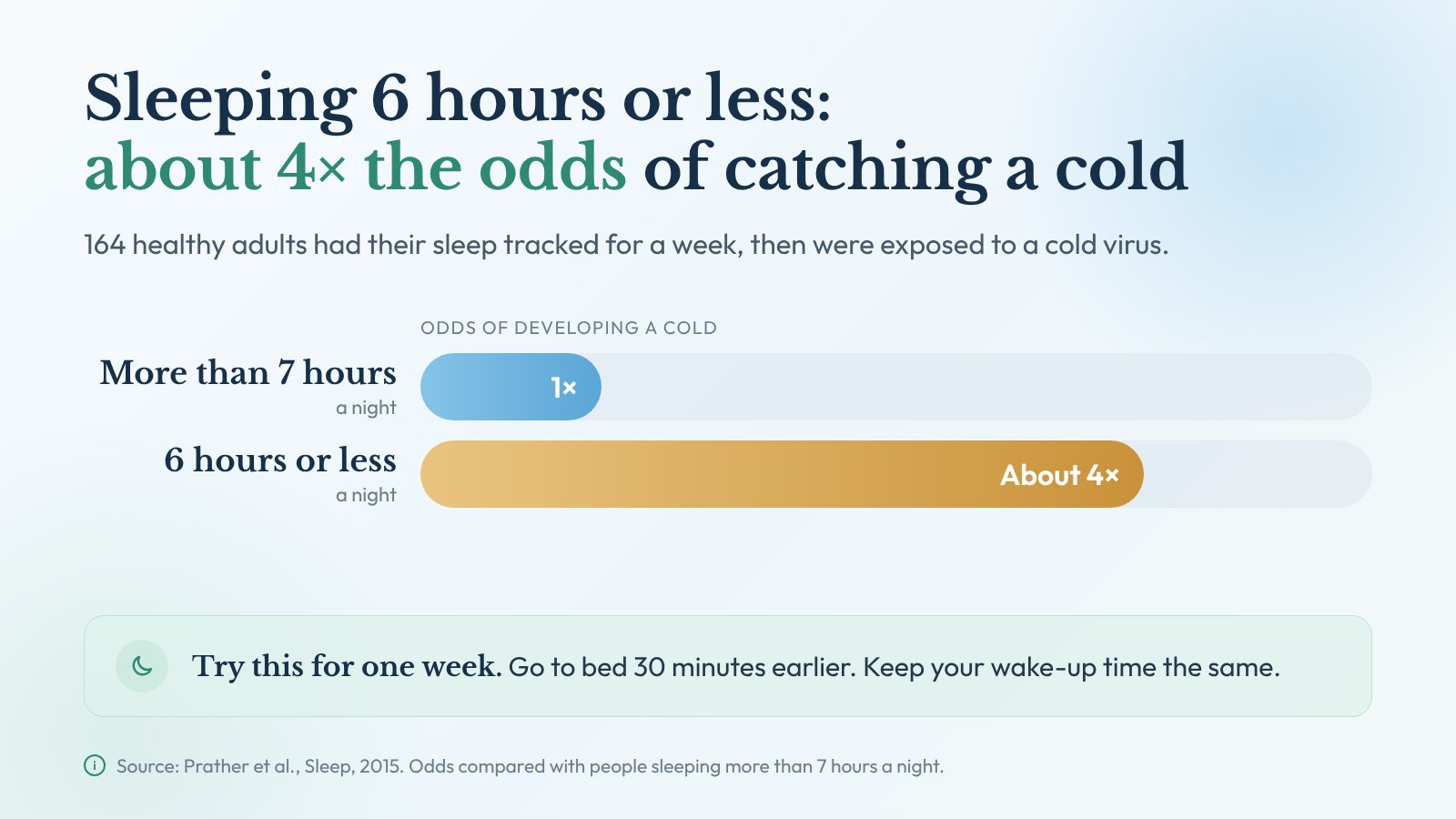
In one fascinating study, researchers monitored the sleep of 164 healthy adults for a week and then exposed them to a common cold virus under controlled conditions.
People sleeping six hours or less had approximately four times the odds of developing a cold compared with those sleeping more than seven hours.
Four times the odds. That’s pretty remarkable.
We often spend money looking for ways to support our immune systems, yet we’re willing to sacrifice sleep night after night.
With the recent time change and darker evenings, now is a good opportunity to pay attention to your sleep routine.
Most adults should aim for seven to nine hours a night.
Try this: For the next week, move your bedtime 30 minutes earlier and keep your wake-up time consistent. It’s a small adjustment that may help you get the sleep you’ve been missing.
And if you’re spending enough time in bed but still waking exhausted, let’s find out why. Sleep problems can have underlying causes worth investigating.
2. Your Immune System Needs the Right Nutrients. Are You Getting Them?
Your immune system relies on a steady supply of nutrients to function properly.
Vitamin C supports normal immune cell function and helps protect cells from oxidative stress. Zinc plays an important role in immune cell development. Vitamin D helps regulate immune responses, while B vitamins support many of the processes your body depends on.
But here’s something I want you to understand.
Knowing a nutrient is important doesn’t automatically mean taking more of it will make your immune system work better.
What matters is whether you’re getting enough in the first place.
And you might be surprised how much you can get from everyday foods.
Red bell peppers and kiwi are excellent sources of vitamin C, not just oranges. Foods like beef, seafood, beans, and pumpkin seeds can contribute zinc. Eggs, fish, and fortified dairy products provide other important nutrients.
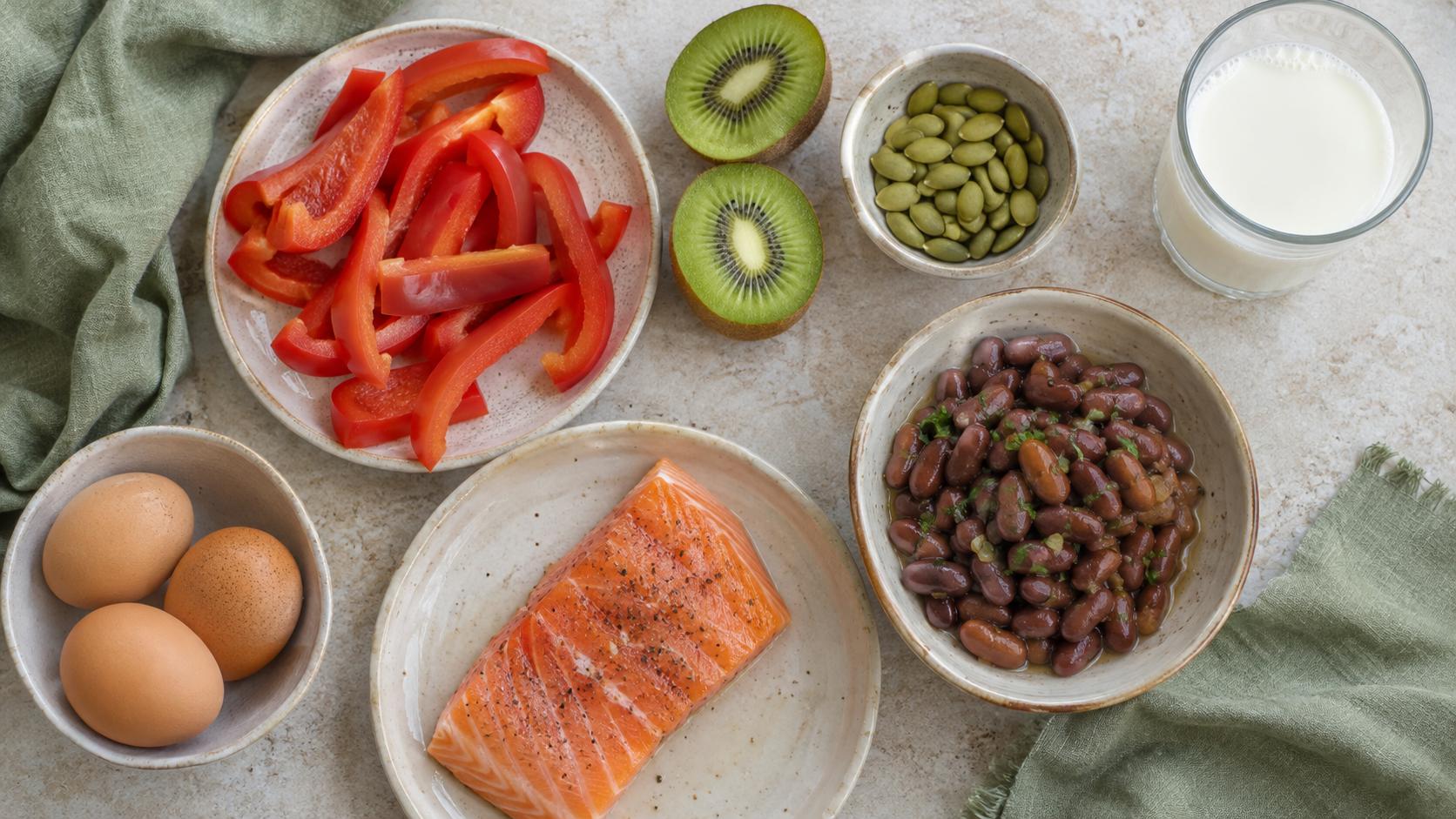
You don’t need to overhaul your diet.
Start by looking at what you’re eating throughout the day.
Are you getting protein with your meals? Eating vegetables and fruit regularly? Or are you running on coffee until lunchtime and grabbing whatever’s convenient?
My suggestion: Instead of buying another immune supplement this week, make sure you’re including a good protein source and some fruit or vegetables at each main meal.
It’s simple, practical, and a good place to start.
And if you’re concerned that you may be low in certain nutrients, we can look into that rather than guessing.
3. What Does the Research Really Say About Immune Supplements?
Walk into almost any pharmacy right now, and you’ll find shelves filled with vitamin C, zinc, vitamin D, and products promising immune support.
Some can be useful. But the details matter.
Vitamin C
A major Cochrane review found that people taking vitamin C regularly didn’t generally catch fewer colds, but their colds lasted about 8% less time on average.
For a cold that would normally last seven days, that’s roughly half a day.
It’s not a miracle, but it’s interesting research.
Zinc
A 2024 Cochrane review found that zinc taken during a cold might shorten symptoms by approximately two days.
That’s potentially meaningful, although the evidence is uncertain, results varied considerably, and side effects such as nausea can occur.
The form, timing, and amount of zinc matter. Taking too much for too long can also interfere with copper levels.
Vitamin D
Vitamin D is important for normal immune function, especially if your levels are low. But taking increasingly high doses isn’t a guarantee against respiratory infections.
So what do I recommend?
Before adding another supplement, ask yourself: Am I taking this because my body needs it, or because the label sounds promising?
That’s where a little individual guidance can make a difference.
What About IV Vitamin Therapy for Immune Health?
This is something I’m particularly passionate about.
I’ve worked with IV nutrient therapy for many years and even wrote a book about it, The IV Solution.
One reason I find IV therapy interesting is that it gives us a different way to deliver nutrients.
When you take vitamins orally, they pass through your digestive system before reaching your bloodstream. Absorption varies depending on the nutrient, the dose, and the individual.
With IV therapy, selected nutrients are delivered directly into the bloodstream, bypassing the digestive system.
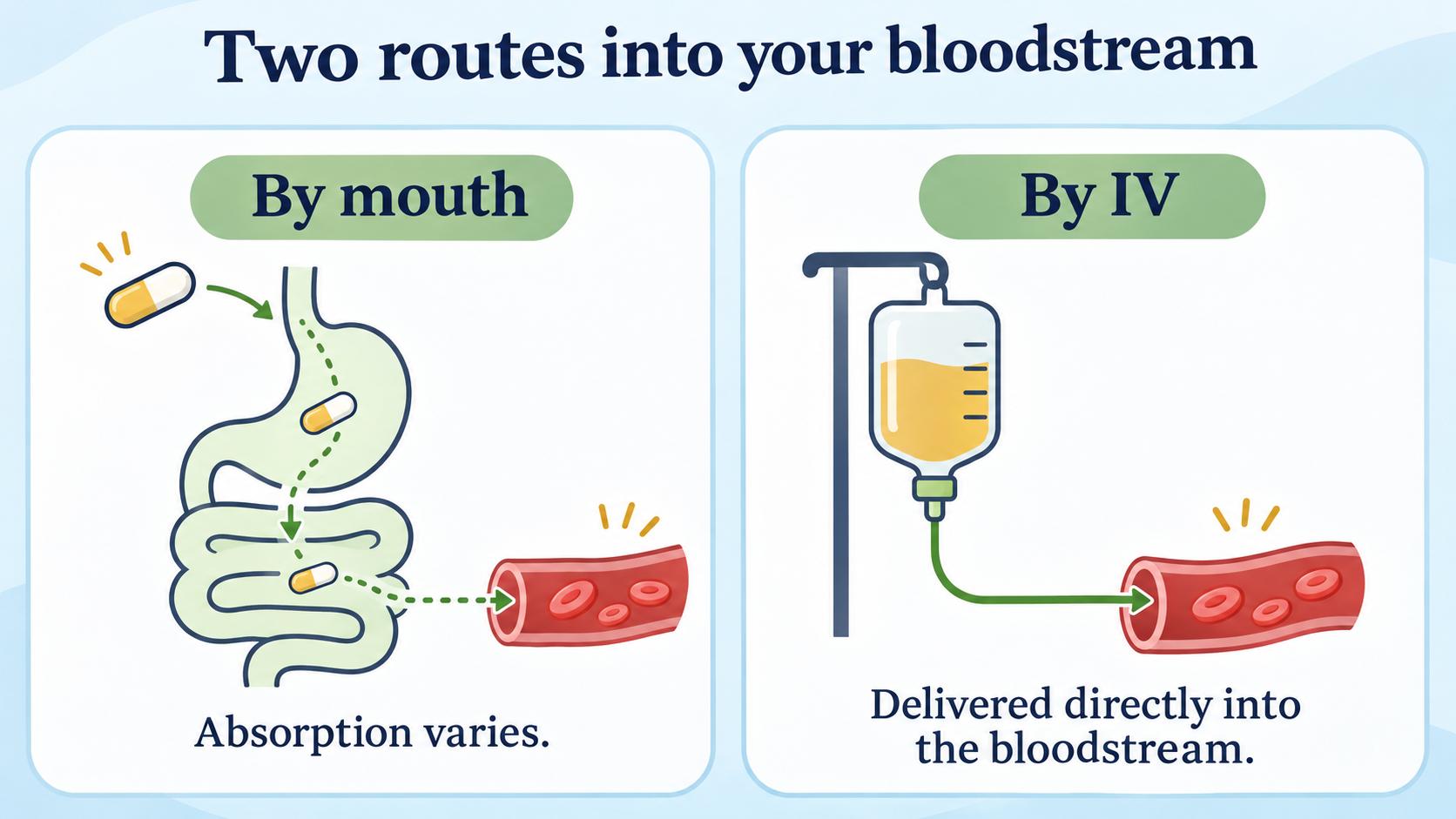
And for certain nutrients, that difference can be substantial.
For example, research has shown that intravenous vitamin C can achieve significantly higher blood concentrations than oral vitamin C.
That doesn’t automatically mean better protection against infections, but it does show how differently the body receives vitamin C depending on how it’s administered.
There’s also some encouraging early research exploring IV vitamin C and fatigue.
In one randomized study involving 141 adults, researchers found improvements in short-term fatigue ratings after IV vitamin C compared with saline alone.
What I find particularly interesting is that, in a subgroup analysis, the improvement was clearer among people who started with lower vitamin C levels.
It’s a small study examining short-term fatigue, not prevention of colds or flu, but it raises worthwhile questions about how individual nutrient status may affect response.
And that’s something I’ve always believed is important in clinical care: understanding the person before choosing the treatment.
What Makes IV Therapy Different at Higher Health?
I don’t believe everyone needs the same IV formula.
At Higher Health, we prepare our IVs fresh on-site and customize the nutrients according to your individual needs and clinical assessment.
Depending on what’s appropriate, a formulation may include vitamin C, zinc, B vitamins, magnesium, and other nutrients.
But before recommending an IV, we want to understand your health history, medications, current concerns, and what you’re hoping to achieve.
We can then discuss whether IV therapy makes sense for you, what nutrients may be appropriate, and any precautions we need to consider.
And if you’ve never had an IV before, there’s nothing you need to figure out on your own.
Our clinical team will explain the process, answer your questions, and monitor you throughout your treatment while you relax in our comfortable IV lounge.

For me, IV therapy is one of the tools we can consider as part of a broader approach to supporting your health.
It’s not a substitute for good nutrition, sleep, or investigating underlying health concerns. And while routine vitamin IVs haven’t been proven to prevent colds or flu, there may be individual circumstances where IV nutrient delivery is appropriate.
If you’ve been curious about IV therapy, I’d encourage you to learn more and have a conversation with us about your options.
Explore IV Vitamin Therapy at Higher Health
Let’s Get Ahead of Winter Together
You don’t need a cupboard full of supplements to take better care of your immune health.
But you may benefit from understanding what your body actually needs.
At Higher Health, our naturopathic doctors take the time to review your health history, nutrition, symptoms, and bloodwork when appropriate, and help you decide which steps make sense for you.
Whether you’re interested in improving your everyday health, exploring targeted supplements, or learning more about IV nutrient therapy, we’d be happy to help.

We offer a free 15-minute introductory phone call with one of our naturopathic doctors for Ontario residents.
It’s an opportunity to share your concerns, ask questions, and see whether Higher Health is the right fit for you.
Book Your Free 15-Minute Consultation
Here’s to a healthier winter!
Dr. Tara Campbell, ND
Founder, Higher Health Naturopathic Centre & IV Lounge
Author of The IV Solution
3363 Yonge Street, 2nd Floor, Toronto
Research & Further Reading
- Prather et al. — Sleep Duration and Susceptibility to the Common Cold (2015)
- National Institutes of Health — Dietary Supplements for Immune Function
- Cochrane Review — Vitamin C for Preventing and Treating the Common Cold (2013)
- Cochrane Review — Zinc for Prevention and Treatment of the Common Cold (2024)
- Padayatty et al. — Oral vs. Intravenous Vitamin C Pharmacokinetics (2004)
- Suh et al. — Intravenous Vitamin C and Fatigue: Randomized Controlled Trial (2012)
Last Updated on Wednesday, November 11, 2026
Why Am I Suddenly So Achy? Could It Be Perimenopause?
Does Acupuncture Work?
The Vitamin D Conversation I’d Rather Have Now Than in January
